Bayesian inverse problems have gained significant attention in recent years due to their strong mathematical foundations, which allow for thorough theoretical analysis. Moreover, the incorporation of measurement errors and noise is of utmost importance to obtain reliable results, for instance, in the context of computational imaging problems, such as computed tomography (CT) and magnetic resonance imaging (MRI).
Energy-based methods constitute a particular way to model probability distributions via Gibbs densities containing a suitable energy functional. These approaches can be used to model prior distributions in Bayesian inverse problems. The energy functional is parametrized, for instance, via fields of expert models and learned from image data using modern machine learning architectures. Thanks to its rich mathematical foundations, the Bayesian framework allows for rigorous theoretical guarantees regarding the obtained image reconstructions. A review paper on the topic of energy-based models for inverse imaging problems is available in [HHPZ2025].
A crucial challenge in learning the components of the prior from data lies in sampling from the prior distribution. Two methods, based on subgradient steps and the unadjusted Langevin algorithm, were developed in [HHP2024] and can also be applied to certain non-smooth potentials.
@inbook{holler2025ebms,
  ISBN = {9780443417894},
  ISSN = {1570-8659},
  url = {http://dx.doi.org/10.1016/bs.hna.2025.09.001},
  DOI = {10.1016/bs.hna.2025.09.001},
  booktitle = {Machine Learning Solutions for Inverse Problems: Part A},
  publisher = {Elsevier},
  year = {2025},
  pages = {1–76}
}
@article{habring2024subgradient,
  title = {Subgradient Langevin Methods for Sampling from Nonsmooth Potentials},
  volume = {6},
  ISSN = {2577-0187},
  url = {http://dx.doi.org/10.1137/23m1591451},
  DOI = {10.1137/23m1591451},
  number = {4},
  journal = {SIAM Journal on Mathematics of Data Science},
  publisher = {Society for Industrial & Applied Mathematics (SIAM)},
  author = {Habring, Andreas and Holler, Martin and Pock, Thomas},
  year = {2024},
  month = {Oct},
  pages = {897–925}
}
@article{holler23uq_mh,
  title = {Posterior-Variance–Based Error Quantification for Inverse Problems in Imaging},
  volume = {17},
  ISSN = {1936-4954},
  url = {http://dx.doi.org/10.1137/23M1546129},
  DOI = {10.1137/23m1546129},
  number = {1},
  journal = {SIAM Journal on Imaging Sciences},
  publisher = {Society for Industrial & Applied Mathematics (SIAM)},
  author = {Narnhofer, Dominik and Habring, Andreas and Holler, Martin and Pock, Thomas},
  year = {2024},
  month = {Feb},
  pages = {301–333}
}
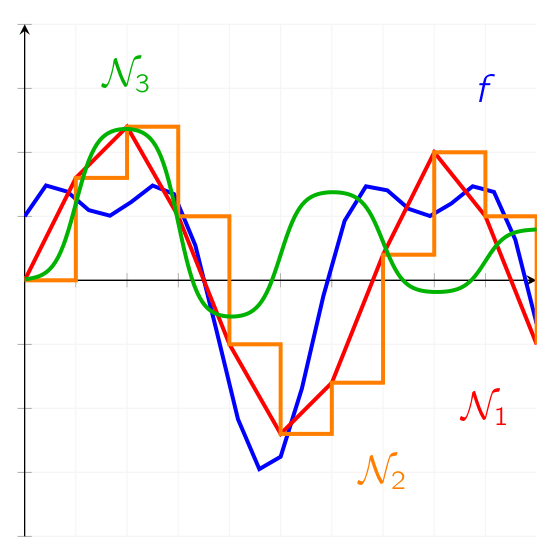
The success of neural network–based machine learning methods stems from their ability to accurately approximate a wide range of functions, enabling them to effectively address diverse real-world problems. This capability is rooted in universal approximation theorems, which position neural networks as versatile and powerful tools for tasks such as image recognition, natural language processing, and predictive modeling.
However, achieving this requires a deep understanding of expressiveness, which determines how well a neural network can capture intricate patterns. This understanding is also key to addressing challenges like overfitting and ensuring robust generalization to unseen data. The study of neural network architectures is also important, including the design of their structures and the choice of activation functions. Developing efficient architectures is a key goal because it ensures models that balance computational cost with high performance across these applications.
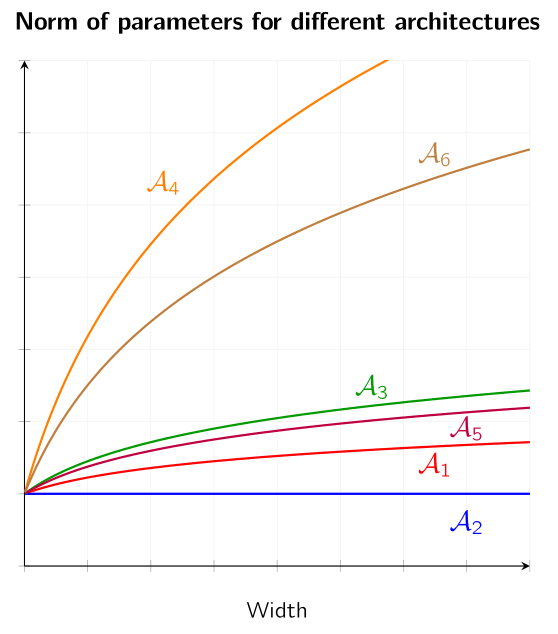
Our research group has investigated how the norm of parameters of approximating neural networks behaves asymptotically (see [HM2024]). This is a crucial factor for establishing consistency results in training and plays a significant role in our convergence results for structured model learning, as well as in conducting a full error analysis. In other work, we derived approximation results up to the first derivative with rates for neural networks that use rational functions as activation functions (see [HM2025]).
@article{morina2024network,
  author = {E. Morina and M. Holler},
  title = {On the growth of the parameters of approximating ReLU neural networks},
  journal = {Accepted for publication in Constructive Approximation},
  year = {2026},
  url = {https://arxiv.org/abs/2406.14936}
}
@misc{morina2025rational,
  doi = {10.48550/ARXIV.2508.19672},
  url = {https://arxiv.org/abs/2508.19672},
  author = {Morina, Erion and Holler, Martin},
  title = {$\mathcal{C}^1$-approximation with rational functions and rational neural networks},
  publisher = {arXiv},
  year = {2025}
}
Cardiac arrest remains a leading cause of death in the Western world, with survival rates around 10%. Timely treatment, including defibrillation and cardiopulmonary resuscitation, is critical for survival. To improve outcomes, analyzing real-world data is essential, yet difficult to obtain. Beyond documentation by emergency medical services, defibrillator recordings are a key data source but are typically limited by proprietary software that allows only predefined analyses.
Our group has worked on several aspects of analyzing defibrillator and physiological data from cardiac arrest cases in order to improve quality control and treatment guidelines in cardiac arrest. Buildin on a large dataset of deffibrillator recordings from cardiac arrest data, we have developed a standardized framework to process and annotate data independent of proprietary tools, a novel algorithm to detect chest compressions from accelerometer-based feedback sensors, and a machine-learning approach where data from accelerometer-based feedback sensors is combined with ECG recordings in order to predict the patient’s circulatory state.
Our work in this field is result of a collaboration with several colleagues from the University of Graz, the Medical University of Graz, the University Hospitals Schleswig-Holstein and Münster, and the German Society of Anaesthisiology & Intensive Care Medicine. As a result of this collaboration, we have implemented a automatic plotting and evaluation tool that is now being used in the German Resuscitation Registry to process data form cardiac arrest treatments throughout Germany and Austria, see here for an onlime demo.
@article{holler22cpr_classification_mh,
  title = {Accelerometry-Based Classification of Circulatory States During Out-of-Hospital Cardiac Arrest},
  volume = {70},
  ISSN = {1558-2531},
  url = {http://dx.doi.org/10.1109/TBME.2023.3242717},
  DOI = {10.1109/tbme.2023.3242717},
  number = {8},
  journal = {IEEE Transactions on Biomedical Engineering},
  publisher = {Institute of Electrical and Electronics Engineers (IEEE)},
  author = {Kern, Wolfgang J. and Orlob, Simon and Bohn, Andreas and Toller, Wolfgang and Wnent, Jan and Gräsner, Jan-Thorsten and Holler, Martin},
  year = {2023},
  month = {Aug},
  pages = {2310–2317}
}
@article{holler22cpf_calculation,
  title = {Chest compression fraction calculation: A new, automated, robust method to identify periods of chest compressions from defibrillator data – Tested in Zoll X Series},
  volume = {172},
  ISSN = {0300-9572},
  url = {http://dx.doi.org/10.1016/j.resuscitation.2021.12.028},
  DOI = {10.1016/j.resuscitation.2021.12.028},
  journal = {Resuscitation},
  publisher = {Elsevier BV},
  author = {Orlob, Simon and Kern, Wolfgang J. and Alpers, Birgitt and Schörghuber, Michael and Bohn, Andreas and Holler, Martin and Gräsner, Jan-Thorsten and Wnent, Jan},
  year = {2022},
  month = {Mar},
  pages = {162–169}
}
To address this, a well-established strategy is to acquire only a reduced amount of data during an MR measurement and to compensate for the missing information using either hand-crafted or learned imaging models that incorporate prior knowledge about the structure of typical images.
Our research group is actively working in this field, particularly in the context of dynamic MRI. In our work, we have for example developed novel image reconstruction methods that reduce MRI data acquisition times by a factor of eight or more, without compromising the quality or diagnostic value of the reconstructed images.
@article{holler17ictgvmri,
  title = {Infimal convolution of total generalized variation functionals for dynamic MRI},
  volume = {78},
  ISSN = {1522-2594},
  url = {http://dx.doi.org/10.1002/mrm.26352},
  DOI = {10.1002/mrm.26352},
  number = {1},
  journal = {Magnetic Resonance in Medicine},
  publisher = {Wiley},
  author = {Schloegl, Matthias and Holler, Martin and Schwarzl, Andreas and Bredies, Kristian and Stollberger, Rudolf},
  year = {2016},
  month = {Aug},
  pages = {142–155}
}
@article{holler18b1_mh,
  title = {Ultrafast 3D Bloch–Siegert B‐mapping using variational modeling},
  volume = {81},
  ISSN = {1522-2594},
  url = {http://dx.doi.org/10.1002/mrm.27434},
  DOI = {10.1002/mrm.27434},
  number = {2},
  journal = {Magnetic Resonance in Medicine},
  publisher = {Wiley},
  author = {Lesch, Andreas and Schlöegl, Matthias and Holler, Martin and Bredies, Kristian and Stollberger, Rudolf},
  year = {2018},
  month = {Oct},
  pages = {881–892}
}
@article{holler16mrpet,
  title = {Joint MR-PET Reconstruction Using a Multi-Channel Image Regularizer},
  volume = {36},
  ISSN = {1558-254X},
  url = {http://dx.doi.org/10.1109/TMI.2016.2564989},
  DOI = {10.1109/tmi.2016.2564989},
  number = {1},
  journal = {IEEE Transactions on Medical Imaging},
  publisher = {Institute of Electrical and Electronics Engineers (IEEE)},
  author = {Knoll, Florian and Holler, Martin and Koesters, Thomas and Otazo, Ricardo and Bredies, Kristian and Sodickson, Daniel K},
  year = {2017},
  month = {Jan},
  pages = {1–16}
}
@inbook{holler22gans_mri_mh,
  title = {Latent-Space Disentanglement with Untrained Generator Networks for the Isolation of Different Motion Types in Video Data},
  ISBN = {9783031319754},
  ISSN = {1611-3349},
  url = {http://dx.doi.org/10.1007/978-3-031-31975-4_25},
  DOI = {10.1007/978-3-031-31975-4_25},
  booktitle = {Scale Space and Variational Methods in Computer Vision},
  publisher = {Springer International Publishing},
  author = {Abdullah, Abdullah and Holler, Martin and Kunisch, Karl and Landman, Malena Sabate},
  year = {2023},
  pages = {326–338}
}
@inproceedings{knoll2016petmritgv,
  title = {Simultaneous PET-MRI reconstruction with vectorial second order total generalized variation},
  url = {http://dx.doi.org/10.1109/NSSMIC.2015.7582009},
  DOI = {10.1109/nssmic.2015.7582009},
  booktitle = {2015 IEEE Nuclear Science Symposium and Medical Imaging Conference (NSS/MIC)},
  publisher = {IEEE},
  author = {Knoll, Florian and Holler, Martin and Koesters, Thomas and Bredies, Kristian and Sodickson, Daniel K},
  year = {2015},
  month = {Oct},
  pages = {1–4}
}
Positron Emission Tomography (PET) is a non-invasive imaging technique that uses radioactive tracers to visualize and measure metabolic activity in the body. By detecting gamma rays from tracer interactions, PET creates detailed 3D images of biological processes. Dynamic PET goes a step further by capturing a series of images over time, providing both spatial and temporal insights into how tracers move and interact, revealing metabolic rates and mechanisms. However, PET imaging faces significant challenges: Reconstructiong a PET image from corresponding measurements requires to solve an inverse problem with a highly ill-posed forward model. Further, PET raw data is usually corrupted by particularly strong noise, which is even more pronounced in dynamic brain PET.
Our research group works on improving PET imaging in several aspects: In some of our works, such as [SHRVKBBN2017, SH2022, SHKBKBN2017, KHKOBS2017] we deal with modelling- and algorithmic aspects of PET image reconstruction, developing efficient algorithms and MR-prior based approaches to improve the quality of the reconstructed images. In other works, such as [HM2024, HM2025], we address more fundamental questions regarding the unique identifiability of physiological parameters in PET tracer kinetic modeling.
@article{morina2024pet,
title = {Exact parameter identification in PET pharmacokinetic modeling using the irreversible two tissue compartment model <sup>*</sup>},
volume = {69},
ISSN = {1361-6560},
url = {http://dx.doi.org/10.1088/1361-6560/ad539e},
DOI = {10.1088/1361-6560/ad539e},
number = {16},
journal = {Physics in Medicine & Biology},
publisher = {IOP Publishing},
author = {Holler, Martin and Morina, Erion and Schramm, Georg},
year = {2024},
month = {July},
pages = {165008}
}
@article{morina2025pet,
  title = {Exact parameter identification in PET pharmacokinetic modeling: extension to the reversible two tissue compartment model},
  volume = {41},
  ISSN = {1361-6420},
  url = {http://dx.doi.org/10.1088/1361-6420/adffac},
  DOI = {10.1088/1361-6420/adffac},
  number = {9},
  journal = {Inverse Problems},
  publisher = {IOP Publishing},
  author = {Holler, Martin and Morina, Erion and Schramm, Georg},
  year = {2025},
  month = {Sept},
  pages = {095009}
}
@article{holler17pls,
  title = {Evaluation of Parallel Level Sets and Bowsher’s Method as Segmentation-Free Anatomical Priors for Time-of-Flight PET Reconstruction},
  volume = {37},
  ISSN = {1558-254X},
  url = {http://dx.doi.org/10.1109/TMI.2017.2767940},
  DOI = {10.1109/tmi.2017.2767940},
  number = {2},
  journal = {IEEE Transactions on Medical Imaging},
  publisher = {Institute of Electrical and Electronics Engineers (IEEE)},
  author = {Schramm, Georg and Holler, Martin and Rezaei, Ahmadreza and Vunckx, Kathleen and Knoll, Florian and Bredies, Kristian and Boada, Fernando and Nuyts, Johan},
  year = {2018},
  month = {Feb},
  pages = {590–603}
}
@article{holler22_pet_lm_mh,
  title = {Fast and memory-efficient reconstruction of sparse Poisson data in listmode with non-smooth priors with application to time-of-flight PET},
  volume = {67},
  ISSN = {1361-6560},
  url = {http://dx.doi.org/10.1088/1361-6560/ac71f1},
  DOI = {10.1088/1361-6560/ac71f1},
  number = {15},
  journal = {Physics in Medicine & Biology},
  publisher = {IOP Publishing},
  author = {Schramm, Georg and Holler, Martin},
  year = {2022},
  month = {July},
  pages = {155020}
}
@inproceedings{schramm2017pet_gradient_mh,
  title = {PET reconstruction with non-smooth gradient-based priors},
  url = {http://dx.doi.org/10.1109/NSSMIC.2016.8069447},
  DOI = {10.1109/nssmic.2016.8069447},
  booktitle = {2016 IEEE Nuclear Science Symposium, Medical Imaging Conference and Room-Temperature Semiconductor Detector Workshop (NSS/MIC/RTSD)},
  publisher = {IEEE},
  author = {Schramm, G. and Holler, M. and Koesters, T. and Boada, F. and Knoll, F. and Bredies, K. and Nuyts, J.},
  year = {2016},
  month = {Oct},
  pages = {1–5}
}
@article{holler16mrpet,
  title = {Joint MR-PET Reconstruction Using a Multi-Channel Image Regularizer},
  volume = {36},
  ISSN = {1558-254X},
  url = {http://dx.doi.org/10.1109/TMI.2016.2564989},
  DOI = {10.1109/tmi.2016.2564989},
  number = {1},
  journal = {IEEE Transactions on Medical Imaging},
  publisher = {Institute of Electrical and Electronics Engineers (IEEE)},
  author = {Knoll, Florian and Holler, Martin and Koesters, Thomas and Otazo, Ricardo and Bredies, Kristian and Sodickson, Daniel K},
  year = {2017},
  month = {Jan},
  pages = {1–16}
}
Most machine learning-based image segmentation models produce pixel-wise confidence scores that represent the model’s predicted probability for each class label at every pixel. While this information can be particularly valuable in high-stakes domains such as medical imaging, these scores are heuristic in nature and do not constitute rigorous quantitative uncertainty estimates. Conformal prediction (CP) provides a principled framework for transforming heuristic confidence scores into statistically valid uncertainty estimates.
Our research is dedicated to advancing both the theoretical foundations and practical applications of innovative, non-trivial conformal prediction methods aimed at improving the interpretability and reliability of image segmentation. In pre-print [VKH2025], we extend pixel-wise CP methods by developing CONSIGN (Conformal Segmentation Informed by Spatial Groupings via Decomposition), a method to leverage spatial correlation for improved results.
The following figure illustrates an example where ignoring the correlation between pixels results in inconsistent predictions and unrealistic pixel combinations. In contrast, our method effectively captures spatial and contextual dependencies, enabling the enforcement of structural constraints. As shown in the figure, our approach achieves a smooth and coherent transition between the segmentation of a sheep and a cow while offering valuable insights into prediction reliability.
@inproceedings{viti2025consign,
  author = {B. Viti and E. Karabelas and M. Holler},
  title = {CONSIGN: Conformal Segmentation Informed by Spatial Groupings via Decomposition},
  booktitle = {International Conference on Learning Representations},
  year = {2026},
  url = {https://arxiv.org/pdf/2505.14113}
}
The field of learning PDE-based models from data is growing rapidly. It is driven by the need to bridge physical principles with data-driven insights and enables successful advances in learning unknown parameters in partially specified PDEs, discovering entirely new PDE structures, and approximating solution operators with remarkable accuracy. Alongside practical applications, there is increasing attention to theoretical analysis addressing consistency, convergence, and generalization. These are essential for ensuring the reliability and robustness of learned models in scientific and engineering contexts.
Our research group focuses on the framework of "structured model learning." Structured model learning builds on approximate physical knowledge and addresses the limitations of overly coarse abstractions by incorporating fine-scale physics learned from data. This approach improves interpretability, accuracy, and generality, enabling the model to handle complex scenarios and external factors beyond the scope of simplified physical principles. Augmenting known physics with data-driven components enables the model to effectively describe phenomena, even in non-ideal or challenging contexts. However, it is crucial to learn only what is necessary to ensure that the augmentation remains efficient and grounded in physical understanding.
Our research group is actively engaged in structured model learning, focusing on both the theoretical foundations and the practical applications. We have investigated the unique identifiability of learned fine-scale physics and established a convergence result with practical relevance (see [HM2024]). Currently, a major focus of our work is learning multi-pool dynamics in magnetic resonance imaging (MRI).
@misc{morina2024uniqueness,
  doi = {10.48550/ARXIV.2410.22009},
  url = {https://arxiv.org/abs/2410.22009},
  author = {Holler, Martin and Morina, Erion},
  title = {On uniqueness in structured model learning},
  publisher = {arXiv},
  year = {2024}
}
@article{holler22pde_learning_mh,
  title = {Learning-Informed Parameter Identification in Nonlinear Time-Dependent PDEs},
  volume = {88},
  ISSN = {1432-0606},
  url = {http://dx.doi.org/10.1007/s00245-023-10044-y},
  DOI = {10.1007/s00245-023-10044-y},
  number = {3},
  journal = {Applied Mathematics & Optimization},
  publisher = {Springer Science and Business Media LLC},
  author = {Aarset, Christian and Holler, Martin and Nguyen, Tram Thi Ngoc},
  year = {2023},
  month = {Aug}
}
@misc{morina2025rdsystems,
  doi = {10.48550/ARXIV.2512.14240},
  url = {https://arxiv.org/abs/2512.14240},
  author = {Morina, Erion and Holler, Martin},
  title = {Physically consistent model learning for reaction-diffusion systems},
  publisher = {arXiv},
  year = {2025}
}
@article{morina2026symbolic,
  author = {E. Morina and P. Scholl and M. Holler},
  title = {Symbolic recovery of PDEs from measurement data},
  journal = {Transactions on Machine Learning Research},
  year = {2026},
  url = {https://arxiv.org/abs/2602.15603}
}
Variational methods are a state-of-the-art approach for solving inverse problems in image processing and beyond. By employing suitable regularization functionals, variational methods enable provably stable and consistent reconstructions for a wide range of inverse imaging problems and effectively compensate for missing data through appropriate mathematical modeling.
Our research group has made several fundamental contributions to the field of variational methods for inverse problems. These include:
@article{holler25infinite_infcon,
  title = {A sparse optimization approach to infinite infimal convolution regularization},
  volume = {157},
  ISSN = {0945-3245},
  url = {http://dx.doi.org/10.1007/s00211-024-01439-2},
  DOI = {10.1007/s00211-024-01439-2},
  number = {1},
  journal = {Numerische Mathematik},
  publisher = {Springer Science and Business Media LLC},
  author = {Bredies, Kristian and Carioni, Marcello and Holler, Martin and Korolev, Yury and Schönlieb, Carola-Bibiane},
  year = {2024},
  month = {Nov},
  pages = {41–96}
}
@article{holler22_reggraphs_mh,
  title = {Regularization graphs—a unified framework for variational regularization of inverse problems},
  volume = {38},
  ISSN = {1361-6420},
  url = {http://dx.doi.org/10.1088/1361-6420/ac668d},
  DOI = {10.1088/1361-6420/ac668d},
  number = {10},
  journal = {Inverse Problems},
  publisher = {IOP Publishing},
  author = {Bredies, Kristian and Carioni, Marcello and Holler, Martin},
  year = {2022},
  month = {Sept},
  pages = {105006}
}
@article{holler2020csc,
  title = {A Convex Variational Model for Learning Convolutional Image Atoms from Incomplete Data},
  volume = {62},
  ISSN = {1573-7683},
  url = {http://dx.doi.org/10.1007/s10851-019-00919-7},
  DOI = {10.1007/s10851-019-00919-7},
  number = {3},
  journal = {Journal of Mathematical Imaging and Vision},
  publisher = {Springer Science and Business Media LLC},
  author = {Chambolle, A. and Holler, M. and Pock, T.},
  year = {2019},
  month = {Nov},
  pages = {417–444}
}
@article{holler20ip_review_mh,
  title = {Higher-order total variation approaches and generalisations},
  volume = {36},
  ISSN = {1361-6420},
  url = {http://dx.doi.org/10.1088/1361-6420/ab8f80},
  DOI = {10.1088/1361-6420/ab8f80},
  number = {12},
  journal = {Inverse Problems},
  publisher = {IOP Publishing},
  author = {Bredies, Kristian and Holler, Martin},
  year = {2020},
  month = {Dec},
  pages = {123001}
}
@article{holler18coupled,
  title = {Coupled regularization with multiple data discrepancies},
  volume = {34},
  ISSN = {1361-6420},
  url = {http://dx.doi.org/10.1088/1361-6420/aac539},
  DOI = {10.1088/1361-6420/aac539},
  number = {8},
  journal = {Inverse Problems},
  publisher = {IOP Publishing},
  author = {Holler, Martin and Huber, Richard and Knoll, Florian},
  year = {2018},
  month = {June},
  pages = {084003}
}
@article{holler18tgvm,
  title = {Total Generalized Variation for Manifold-Valued Data},
  volume = {11},
  ISSN = {1936-4954},
  url = {http://dx.doi.org/10.1137/17M1147597},
  DOI = {10.1137/17m1147597},
  number = {3},
  journal = {SIAM Journal on Imaging Sciences},
  publisher = {Society for Industrial & Applied Mathematics (SIAM)},
  author = {Bredies, K. and Holler, M. and Storath, M. and Weinmann, A.},
  year = {2018},
  month = {Jan},
  pages = {1785–1848}
}
@article{holler15tgvrec_p1,
  title = {A TGV-Based Framework for Variational Image Decompression, Zooming, and Reconstruction. Part I: Analytics},
  volume = {8},
  ISSN = {1936-4954},
  url = {http://dx.doi.org/10.1137/15M1023865},
  DOI = {10.1137/15m1023865},
  number = {4},
  journal = {SIAM Journal on Imaging Sciences},
  publisher = {Society for Industrial & Applied Mathematics (SIAM)},
  author = {Bredies, Kristian and Holler, Martin},
  year = {2015},
  month = {Jan},
  pages = {2814–2850}
}
@article{holler15tgvrec_p2,
  title = {A TGV-Based Framework for Variational Image Decompression, Zooming, and Reconstruction. Part II: Numerics},
  volume = {8},
  ISSN = {1936-4954},
  url = {http://dx.doi.org/10.1137/15M1023877},
  DOI = {10.1137/15m1023877},
  number = {4},
  journal = {SIAM Journal on Imaging Sciences},
  publisher = {Society for Industrial & Applied Mathematics (SIAM)},
  author = {Bredies, Kristian and Holler, Martin},
  year = {2015},
  month = {Jan},
  pages = {2851–2886}
}
@inbook{holler15mpeg,
  title = {Artifact-Free Variational MPEG Decompression},
  ISBN = {9783319184616},
  ISSN = {1611-3349},
  url = {http://dx.doi.org/10.1007/978-3-319-18461-6_18},
  DOI = {10.1007/978-3-319-18461-6_18},
  booktitle = {Scale Space and Variational Methods in Computer Vision},
  publisher = {Springer International Publishing},
  author = {Bredies, Kristian and Holler, Martin},
  year = {2015},
  pages = {216–228}
}
@article{holler14inversetgv,
  title = {Regularization of linear inverse problems with total generalized variation},
  volume = {22},
  ISSN = {1569-3945},
  url = {http://dx.doi.org/10.1515/jip-2013-0068},
  DOI = {10.1515/jip-2013-0068},
  number = {6},
  journal = {Journal of Inverse and Ill-posed Problems},
  publisher = {Walter de Gruyter GmbH},
  author = {Bredies, Kristian and Holler, Martin},
  year = {2014},
  month = {Feb},
  pages = {871–913}
}
@inbook{holler13zooming,
  title = {A TGV Regularized Wavelet Based Zooming Model},
  ISBN = {9783642382673},
  ISSN = {1611-3349},
  url = {http://dx.doi.org/10.1007/978-3-642-38267-3_13},
  DOI = {10.1007/978-3-642-38267-3_13},
  booktitle = {Scale Space and Variational Methods in Computer Vision},
  publisher = {Springer Berlin Heidelberg},
  author = {Bredies, Kristian and Holler, Martin},
  year = {2013},
  pages = {149–160}
}
@article{holler12tvjpeg,
  title = {A Total Variation–Based JPEG Decompression Model},
  volume = {5},
  ISSN = {1936-4954},
  url = {http://dx.doi.org/10.1137/110833531},
  DOI = {10.1137/110833531},
  number = {1},
  journal = {SIAM Journal on Imaging Sciences},
  publisher = {Society for Industrial & Applied Mathematics (SIAM)},
  author = {Bredies, K. and Holler, M.},
  year = {2012},
  month = {Jan},
  pages = {366–393}
}